
How Executive Search Teams Use 100Hires
How Executive Search Teams Use 100Hires
Who this is for
Executive search teams managing confidential searches, passive candidates, client shortlists, and long relationship cycles.
What makes this hiring workflow different
- Confidentiality matters
- Candidate context accumulates over months
- Client presentation requires consistent evidence
Recommended 100Hires setup
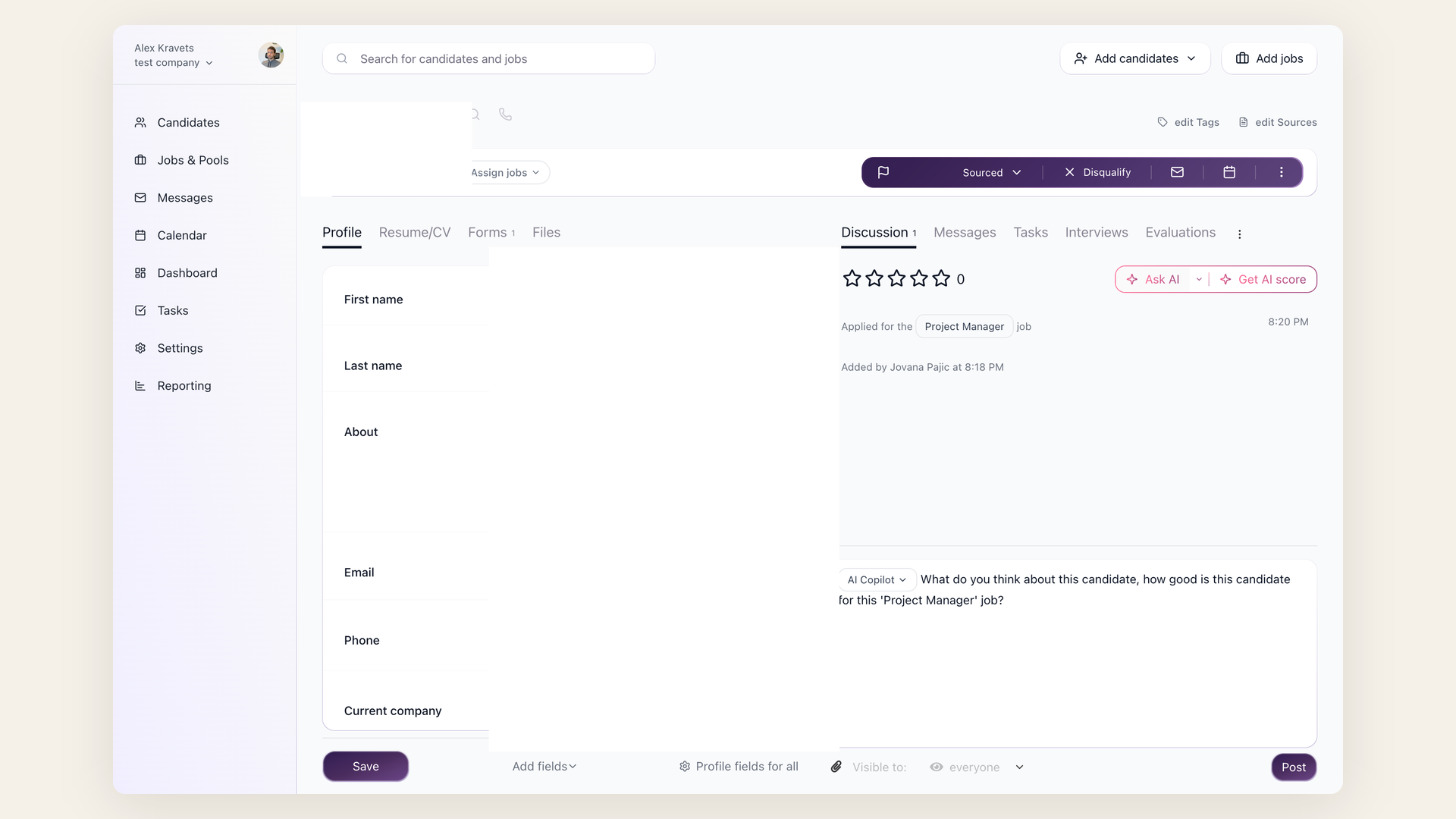
Discussion notes and visibility controls
Record context and restrict sensitive notes when needed.

Tags and talent pools
Track market, seniority, function, availability, and client fit.

AI Copilot
Summarize candidate strengths, risks, and follow-up questions from profile context.
Evaluation Forms
Capture structured interview feedback before client submission.

Suggested workflow
Sourced -> Longlist -> Outreach -> Recruiter screen -> Client shortlist -> Client interview -> Offer
Use this as a starting point. Adjust the stage names, automations, evaluation forms, and messages to match your actual process.
Operating tips
- Keep the first application form short, then move deeper screening into questionnaires or recruiter follow-up when the role requires it.
- Store repeatable requirements as Profile Fields, form answers, tags, or evaluation form answers instead of burying them in free-text notes.
- Test every automation on a sample candidate before relying on it for live applicants.
- Use bulk actions for clear administrative changes, but review edge cases before sending rejection emails.
- Review source performance periodically so the team spends time on channels that produce qualified candidates, not only high applicant volume.
- Put private hiring priorities in Job Notes when they should guide internal review but should not appear on the public job post.
Updated on: 16/06/2026
Thank you!